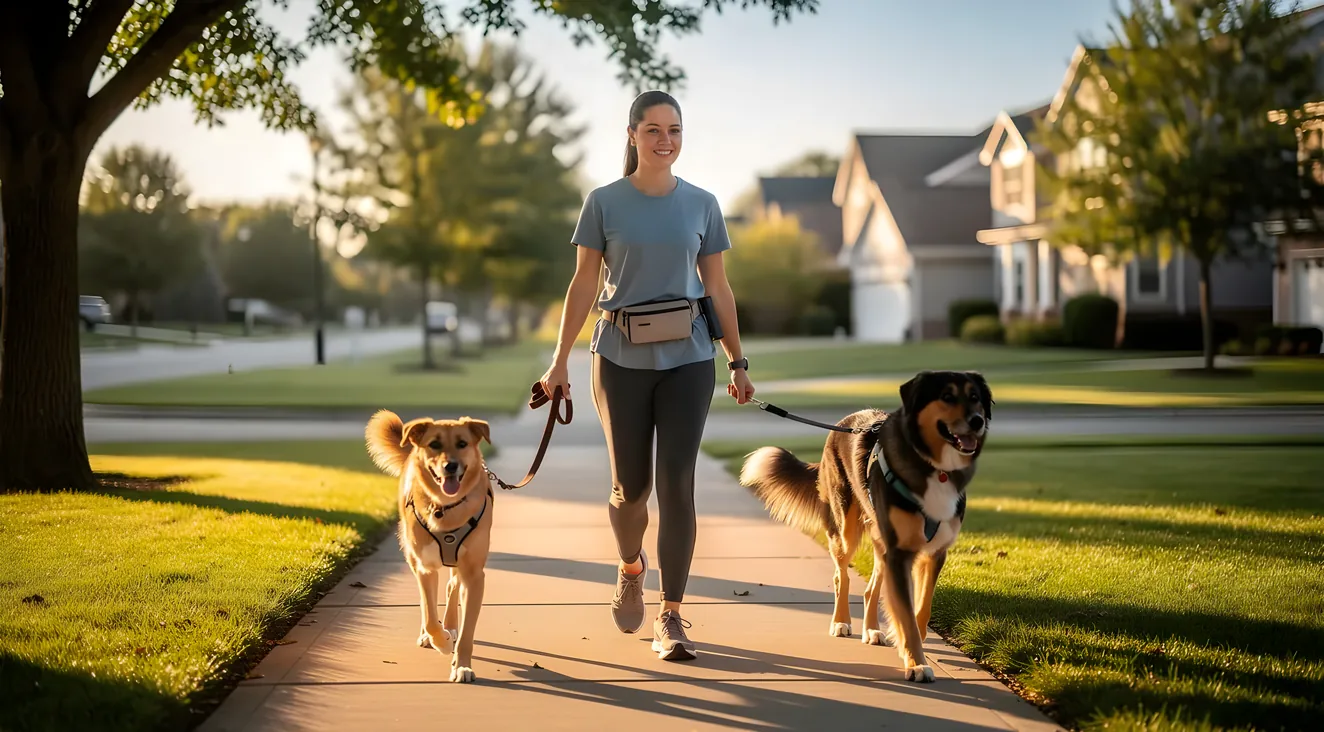
A dog walk in Melissa, TX typically runs 20 to 30 minutes and includes a leash walk, a water break, and waste cleanup, booked either as a solo visit for one dog or a small group walk with a few compatible dogs. Most arrangements start with a meet-and-greet before the first walk, so the walker and the dog's owner can agree on route, pace, and any handling notes ahead of time. How often a dog needs this depends mainly on two things: energy level and how long the dog is left alone during the day. A single midday visit covers a moderate-energy dog with yard access, while higher-energy breeds, puppies, and dogs stuck inside for a full workday usually do better with a daily walk. Age matters too; senior dogs generally need shorter, gentler outings rather than a longer route. From roughly June through September, Melissa's heat pushes pavement temperatures well above the air temperature, so walk timing shifts to early morning or evening to keep dogs safe.
What a Professional Dog Walk Includes
A standard dog walk in Melissa runs about 20 to 30 minutes on a leash, with a water break on warmer days and waste cleanup before the walker leaves the yard. The route stays close to home, since the goal is a consistent bathroom break and a stretch of exercise rather than a full outing.
Most arrangements start with a meet-and-greet before the first walk, a short visit where the walker meets the dog, confirms feeding and behavior notes, and arranges house access, usually a key or a lockbox mounted near the door. Many walkers send a photo or short text update once the walk wraps up, so the owner knows the dog is back inside and settled.
Dog walking covers the walk itself and not much beyond it. A dog that needs feeding, medication, or a longer stretch of daytime company is better matched to a full in-home pet care visit, which covers that broader range of needs.
Solo Walks vs. Group Walks
Solo walks put one walker with one dog for the full session, which means undivided attention and a pace set entirely around that dog. This suits dogs that are reactive around other animals, anxious in new situations, or older and better off without the added stimulation of a crowd. A solo walk also makes it easier for a walker to notice small changes, like limping or unusual fatigue.
Group walks bring together a few compatible dogs from different households, matched by size and temperament before they're ever walked together. The format tends to cost less per visit and adds socialization a solo walk doesn't offer, but it isn't right for every dog. A dog that gets nervous, possessive, or overly excited around unfamiliar dogs generally does better solo, even where group walks are offered locally.
Neither format is inherently better. The right call comes down to the individual dog's temperament, which is exactly what a meet-and-greet is meant to surface before a walker recommends one format over the other.
How Often Your Dog Should Be Walked
Walk frequency comes down to three things: the dog's energy level, its age, and how long it's left alone during a typical workday. A moderate-energy dog with yard access might need just a single midday walk, while a higher-energy dog confined to the house for eight or nine hours usually benefits from a daily walk at the same time each day.
Dogs on the lower end of the energy scale, along with senior dogs, often need less frequent walking focused on a gentle stretch rather than a full workout. Puppies fall on the opposite end: short, frequent walks work better than one long walk, both for exercise and for reinforcing house-training habits.
Frequency isn't fixed. It can shift with the seasons, a change in schedule, or as the dog ages, and it also affects cost directly, since more visits per week means a higher weekly total. For a full breakdown of how visit length and frequency affect pricing, see how much a pet sitter costs in Melissa, TX.
Which Dogs Benefit Most from Regular Walks
High-energy and working breeds, bred for herding, retrieving, or long days of physical activity, tend to struggle with a backyard alone. A structured walk gives that energy somewhere to go, which often shows up as calmer behavior indoors once the walk becomes part of the routine.
Puppies benefit differently. Short, frequent walks burn off a young dog's extra energy while reinforcing house-training, since a puppy walked on a predictable schedule learns to associate being outside with the right time to go.
Dogs left alone for long workdays benefit most, regardless of breed or age. A midday walk breaks up a long stretch of isolation, gives the dog a bathroom break it might otherwise hold for hours, and often makes the difference between a dog that's relaxed by the time its owner gets home and one that's wound up from being cooped up all day. Senior dogs benefit too, though usually from a shorter, gentler version of the same routine.
Walking Dogs Safely Through Melissa's Summer Heat
North Texas summers, roughly June through September, push pavement and asphalt temperatures well above the surrounding air temperature, especially on direct, sun-exposed surfaces during the hottest part of the day. Walks scheduled for early morning or evening avoid that window, when the ground has cooled and the air itself is more manageable for exercise.
A quick, practical check before any midday walk: press the back of a hand to the pavement and hold it there for a few seconds. If it's too hot to keep a hand there comfortably, it's too hot for paw pads, and the walk should wait or move to grass and shade instead.
Heat stress can build gradually, so it helps to know the early signs: heavy panting that doesn't ease up, sluggish movement, or a dog that starts pulling toward shade or slowing its pace on its own. Any of those is a signal to cut the walk short, get the dog water and shade, and let it cool down rather than finishing the planned route. This kind of seasonal scheduling is what separates a walker who treats every city the same from one who actually adjusts for Melissa's stretch of the Texas summer.
Frequently Asked Questions About Dog Walking in Melissa, TX
What's included in a typical dog walk in Melissa, TX? A typical walk covers a leash walk of about 20 to 30 minutes, a water break, and waste cleanup, with a photo or text update once the dog is back inside.
Are group dog walks safe for my dog? Group walks work well for social dogs comfortable around unfamiliar animals, but not every dog. A walker should ask about temperament during the meet-and-greet before placing a dog into a group.
How many walks a week does my dog actually need? It depends on energy level, age, and how long the dog is alone during the day, ranging from a couple of walks a week for a moderate-energy dog with yard access to most weekdays for a higher-energy dog stuck inside all day.
What temperature is too hot to walk a dog in Melissa, TX? Press the back of a hand to the pavement for a few seconds. If it's uncomfortable to hold there, it's too hot for paws, and the walk should shift to early morning, evening, or shaded grass instead.
How much does dog walking cost in Melissa, TX? Rates vary by visit length and how many walks are booked per week. See how much a pet sitter costs in Melissa, TX for a full breakdown.
Dog walking is one of several in-home pet care formats in Melissa, TX; the full range of pet sitting services covers the others, and the pricing guide breaks down how visit length and frequency affect the weekly total.